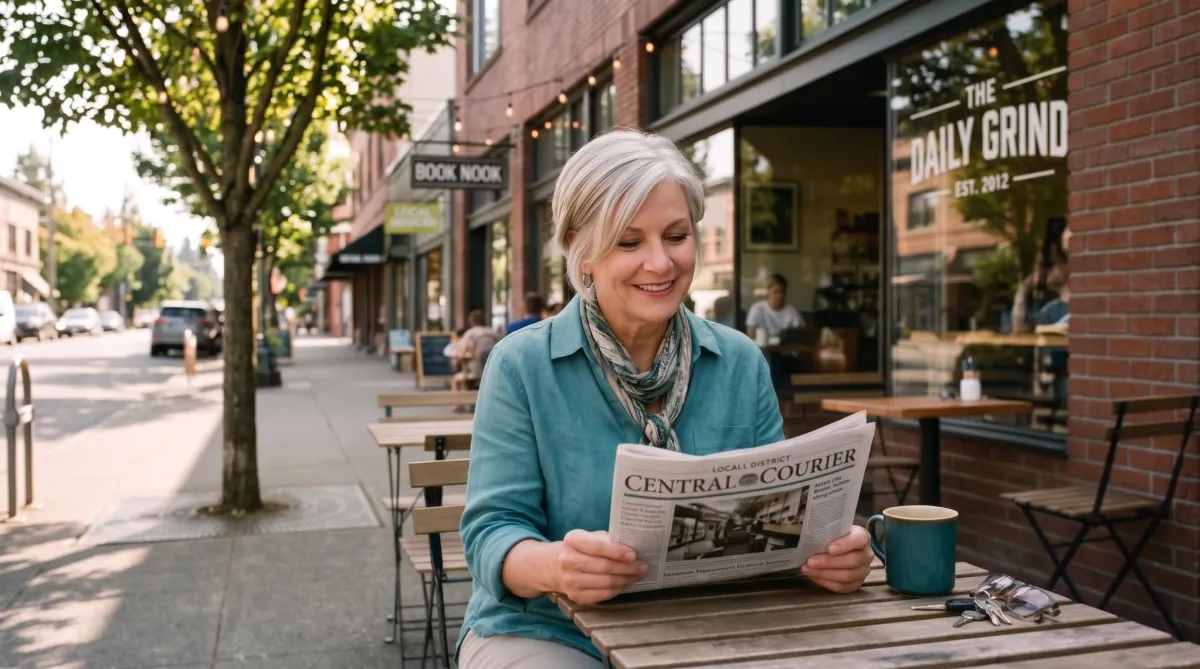
Retiring Solo:
The Practical Blueprint for Moving and Thriving on Your Own
Retiring as a solo ager comes with an extraordinary advantage: complete autonomy.
You do not have to negotiate climate preferences, compromise on floor plans, or pick a state just to appease a spouse's golfing habit. The destination is 100% your choice.
The flip side of that freedom is total operational responsibility.
When a couple moves to a new city, they bring an automatic emergency contact, an in-house rideshare driver after medical procedures, a second pair of hands for home maintenance, and an instant social bubble. When you relocate solo, you are the entire administrative department, moving crew, and emergency response system.
If you pack up and move to a remote mountain cabin or an isolated coastal development without an intentional infrastructure around you, total independence can rapidly turn into total isolation.
Solo retirement relocation requires a completely different tactical checklist. It demands zeroing in on personal safety nets, walkable community density, single-payer budget realities, and local support systems long before you pack a single box.

The Solo Ager Reality: Why Standard Relocation Advice Fails
Mainstream relocation guides are written for nuclear families or couples. They talk about large square footage, guest bedrooms for visiting grandchildren, and quiet cul-de-sacs.
For someone moving solo, that generic advice is often counterproductive.
If you retire alone into a traditional four-bedroom suburban house on a half-acre lot:
The maintenance burden falls entirely on you. When the HVAC goes out, the roof leaks, or the lawn needs mowing, you have no in-house backup.
The "Single Tax" hits harder. Couples split utility baselines, internet packages, property maintenance fees, and trash services. You absorb those fixed costs alone, meaning high-tax or high-insurance jurisdictions bite into your monthly cash flow with zero dilution.
Suburban car dependency breeds isolation. If you twist an ankle, undergo minor eye surgery, or eventually limit your night driving, a home that requires a fifteen-minute highway drive just to buy a gallon of milk quickly becomes a cage.
A successful solo relocation prioritizes access over square footage and community over privacy.
The Five Pillars of a Solo Relocation Plan
To select a destination that protects your long-term independence, run your target cities through these five solo-specific filters.
1. The Outpatient Procedure Test
This is the ultimate test of solo independent living.
Think about routine medical care: an endoscopy, cataract surgery, or a minor orthopedic procedure. Ambulatory surgical centers will not discharge a patient into an Uber, a Lyft, or a city cab. Their strict legal policy requires an adult friend, family member, or bonded medical transport companion to sign you out and escort you home.
Before picking a city, identify:
Are there accessible non-profit volunteer transport networks (such as local senior ride cooperatives)?
Are vetted, licensed private caregiver agencies available on an hourly basis for discharge logistics?
How dense is the immediate primary care network relative to your neighborhood?
If a town lacks basic logistical support for people living alone, it will fail you the moment you face a routine medical issue.
2. Micro-Location and Walkable "Third Places"
When you move to a new area alone, nobody is coming to knock on your door.
If your daily life requires getting into a car to go anywhere, every social interaction requires deliberate, planned effort. That high friction leads to retreating inward.
Target micro-neighborhoods with natural walkable daily density:
A library, coffee shop, or independent grocer within a safe, well-lit ten-minute walk.
Active park systems, rail-trails, or recreation hubs.
Neighborhoods with front-porch architecture or active mixed-use plazas rather than high-privacy privacy fences and closed-door subdivisions.
You want an environment where you naturally run into the same familiar faces every morning. Familiarity breeds casual conversation, casual conversation breeds acquaintance, and acquaintance builds a local safety net.
3. Housing Footprint: The Lock-and-Leave Imperative
Solo retirees frequently overestimate their need for space.
A larger home does not just cost more in property taxes and insurance; it costs time, energy, and physical labor. Every unused room is space you have to heat, cool, furnish, and clean.
Focus on housing that offers physical scalability and minimal maintenance:
Single-story living: Zero-threshold entries, wide hallways, and walk-in showers that accommodate changes in mobility without requiring sudden, expensive renovations.
Condos, townhomes, and low-maintenance cottages: Neighborhoods where exterior maintenance, roof replacement, landscaping, and irrigation are covered under a collective HOA fee.
Lock-and-leave capability: If you want to take off for three weeks to travel, visit family, or house-sit, you should be able to turn a key and walk away without worrying about frozen pipes, tall grass, or package theft.
4. Legal Architecture and the Chosen Family Network
Relocating solo means re-establishing your legal and administrative safety net in your new state. Estate planning and medical powers of attorney do not automatically translate seamlessly when you cross state borders.
The moment you relocate, establish your professional and local support structure:
Update your Advance Directives: Appoint a trusted healthcare proxy and durable power of attorney who understands your wishes. If you do not have close family, explore professional fiduciary services or trusted friends.
Identify your local emergency contacts: You need at least two people within a twenty-minute radius who hold a key to your home and know your basic medical history.
File local documents: Ensure your medical directives are on file with the regional hospital network in your new hometown.
5. Financial Insulation: Eliminating Volatility
When you run a solo household, budget shocks carry no shock absorbers.
If a special assessment hits a condo community, property taxes surge by 30%, or homeowners insurance doubles, there is no second retirement income to soften the blow.
Prioritize locations with high tax and cost stability:
Evaluate assessment caps: States that restrict annual increases on primary residence assessments protect solo homeowners from being priced out of their homes by local gentrification.
Scrutinize HOA financial health: If looking at a condominium or planned community, inspect the reserve study. An underfunded reserve will lead to sudden special assessments that hit fixed-income solo residents hard.
Diversified transit options: Choose an area where you can manage daily life via walking, biking, or public transit if car expenses or mechanical repairs temporarily disrupt your vehicle access.
Image Suggestion 2 (Inline Image)
Placement: Within the "Comparative Destination Matrix" section.
Visual Description: An organized, side-by-side visual breakdown comparing two community types: a high-friction isolated suburban cul-de-sac versus an active, walkable village center with integrated amenities, illustrating pedestrian paths, clinic access, and public spaces.
Alt Text: Visual comparison between isolated suburban housing and an interconnected, walkable village setting.
Caption: For a solo mover, neighborhood layout directly influences daily social interaction and long-term autonomy.
Comparing Destination Types for Solo Retirees
Not all communities are designed equally for someone living on their own. Here is how standard retirement settings compare when evaluated strictly through a solo ager lens:
Community Type | Autonomy & Privacy | Social Ease | Healthcare Proximity | Maintenance Burden |
Traditional Suburb | Very High | Low (Requires driving) | Moderate to High | High (All on you) |
55+ Master Planned | Moderate | High (Built-in clubs) | Moderate | Low to Moderate |
Walkable Small Town | High | High (Organic encounters) | Low to Moderate | Moderate |
Urban Infill / Village | Moderate | Very High (Transit/Access) | Very High | Very Low (HOA/Condo) |
While a 55+ age-restricted community or an active urban core may seem socially crowded to someone who values peace, they offer solo individuals massive structural advantages: built-in maintenance management, shared security, and structured social calendars where attending alone is completely normalized.
The Solo Relocation Action Plan
If you are preparing to move on your own, do not jump straight into property listings. Follow this chronological execution roadmap:
Phase 1: The Solo Capability Audit
Identify your non-negotiables: Write down what you cannot live without. If you do not drive after dark, an urban core or village center with streetlights and nearby conveniences is a non-negotiable.
Model your single-payer budget: Add a 15% contingency buffer to your anticipated living expenses to account for outsourced services that couples often handle themselves (e.g., handyman tasks, seasonal yard cleanup, pet care during travel).
Assess regional medical networks: Verify that target areas have hospital networks with established patient transport, specialized clinics, and a broad roster of independent primary care doctors accepting Medicare.
Phase 2: The Solo Immersion Trip (The "Test Drive")
Visit your candidate town alone. Do not bring a friend, adult child, or relative. You need to experience the reality of navigating the area by yourself.
Dine out solo: Eat dinner alone at local counters, neighborhood cafes, and community diners. Notice whether the environment feels welcoming and comfortable or intensely couple-centric.
Use local healthcare facilities: Walk into a local urgent care clinic or outpatient lab for routine bloodwork. Evaluate wait times, staff attentiveness, and overall facility cleanliness.
Engage with community hubs: Spend three hours at the local public library, visit the municipal recreation center, or join a local group walk. Note how easy or difficult it is to start conversations with strangers.
Walk after dark: Experience the neighborhood at 8:30 PM on a weekday. Is there adequate street lighting? Are people out walking dogs, or is the area completely deserted?
Phase 3: The Mandatory One-Year Lease
Renting for the first year is valuable for anyone moving to a new region, but it is essential for a solo mover.
Moving solo carries a high learning curve. You might think you want complete quiet, only to find that living in a low-density neighborhood feels isolating when you don't have a partner at home. Or you might think you want a busy downtown condo, only to find the noise disruptive.
A twelve-month lease gives you:
An immediate trial run without capital risk.
Zero home repair liabilities while you learn the local service providers.
A low-stress exit route if the area fails to deliver on your social or logistical expectations.
Phase 4: Building Your Local Core in the First 90 Days
When you arrive in your new home, your primary job during the first three months is not decorating. It is building your local network.
Join two structured groups within 14 days: Sign up for an organized volunteer project, a pickleball league, a book club, or a woodshop guild. Consistency is key: pick groups that meet weekly at the same time so you see the same cohort repeatedly.
Find your local tradespeople: Identify a reliable handyman, an automotive technician, and an emergency plumber before an issue arises. Ask your rental manager or immediate neighbors for vetted recommendations.
Introduce yourself to your immediate perimeter: Make it a point to say hello to the three neighbors living closest to your front door. Let them know you live alone, exchange cell numbers, and establish a mutual agreement to keep an eye on each other's homes.
The Solo Relocation Readiness Checklist
Use this checklist to evaluate any potential retirement destination before signing a lease or contract:
[ ] Walkable access to daily necessities (groceries, pharmacy, cafe) within 15 minutes.
[ ] Local outpatient surgical centers permit vetted medical transport or caregiver sign-outs.
[ ] Home layout features single-level living and low exterior maintenance obligations.
[ ] Property tax rules include circuit-breaker protections or assessment caps.
[ ] HOA reserves (if applicable) exceed 70% funding to avoid sudden special assessments.
[ ] Active civic or recreational organizations meet on a consistent weekly basis.
[ ] Regional medical system includes comprehensive specialty care within a 30-minute drive.
[ ] Personal legal documents (Healthcare Proxy, POA) are updated for the destination state.
[ ] Two local emergency contacts are established within a 20-minute radius.
Retiring solo is not about settling for less. It is about building a lifestyle that supports your independence, safeguards your health, and surrounds you with an intentional community you choose for yourself. When you approach the move with clear-eyed logistics rather than romanticized expectations, you set yourself up for decades of true freedom.
Keith Lucas, Retirement Relocation Strategist™
