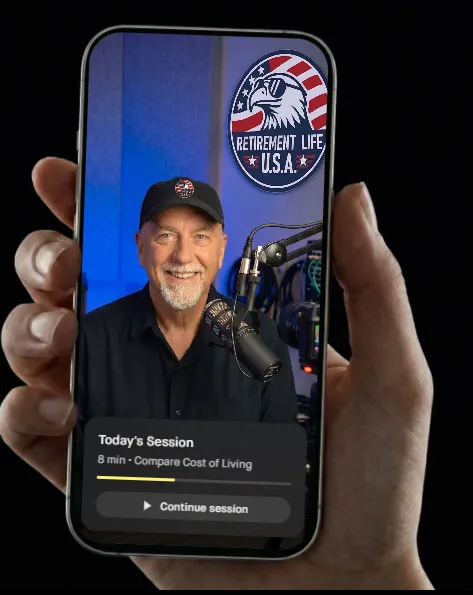
The Retirement Relo APP is now available.
See Details below and start your Personalized Retirement Relocation with confidence and clarity.
Welcome to the Blog - Life After Work, With a Side of Truth
Hey there. You made it to the blog, nice job dodging all the clickbait.
Here’s where we talk about what really happens after you clock out for the last time. Retirement isn’t just about golf carts and early-bird specials (though we’re not knockin’ a good buffet). This blog dives into the real stuff, finding purpose, staying sane, and maybe even enjoying yourself a little while Uncle Sam tries to take another bite of your savings.
You’ll find:
Real talk about life after work. Helpful guides on how to retire without losing your mind (or your money) and a ton of listicles, best beach towns, worst tax traps, cheap spots that aren’t dumps, and all the places that either feel like heaven… or smell like regret.
It’s part inspiration, part information, with a sprinkle of sarcasm and a whole lotta heart.
Welcome to the Blog
Life After Work, With a Side of Truth

Relocation That Holds Up in Real Life (Not Just on a Scouting Trip)

Relocation is one of those decisions that feels exciting right up until it becomes real.
Boxes. Paperwork. Utilities. New doctors. New grocery stores. New traffic patterns that somehow feel personal. Everyone loves the idea of moving. Fewer people love the reality if they didn’t think it through.
Most relocation regret doesn’t come from choosing the wrong state. It comes from choosing the right fantasy and the wrong daily life.
This post is your Monday reality check. Not negative. Not fear based. Just honest., but nice.
The goal is simple. Help you land somewhere that still feels right when the novelty wears off and Tuesday morning shows up uninvited.
Stop Shopping for States and Start Designing Your Days
The biggest mistake people make is starting with a map.
“I want Florida.”
“I’m thinking Texas.”
“Everyone I know is moving to Tennessee.”
Cool. But that tells me nothing.
Instead, start with how you actually live.
Ask yourself:
Do I want quiet mornings or background noise
Do I enjoy driving or resent it deeply
Do I want neighbors nearby or space to breathe
Do I thrive on activity or routine
Do I want convenience or calm
Your answers narrow the field faster than any “Top 10 Places” list ever will.
If you skip this step, you risk moving somewhere impressive that quietly irritates you every day.
Cost of Living Is About Monthly Peace, Not Bragging Rights
Everyone says they want a low cost of living. What they really want is a life that doesn’t feel financially tight all the time.
This is where people fool themselves.
Home price alone means nothing. The real cost of living shows up monthly and consistently.
You need to factor in:
Property taxes
Homeowners insurance
Utilities in extreme seasons
HOA fees and surprise assessments
Transportation costs
Travel expenses to see family and friends
Helpful tools that cut through the nonsense:
https://www.bankrate.com/calculators/savings/moving-cost-of-living-calculator.aspx
https://www.numbeo.com/cost-of-living/
If the math makes you uneasy now, it will not magically improve later.
Climate Is Not a Personality Trait
Liking sunshine does not mean you like heat.
Liking seasons does not mean you like long winters.
Liking “warm” does not mean you like humidity that hugs you aggressively.
Climate affects:
Energy levels
Health
Daily habits
Mood
Before committing, look beyond averages:
https://riskfactor.com
https://climatecheck.com
Then visit during the worst season, not the best. Anyone can love a place in April. January and August are where truth lives.
Healthcare and Airports Are Quality-of-Life Anchors
This part isn’t glamorous, but it matters more than people admit.
You want:
A solid hospital system within reasonable distance
An airport that does not require an overnight stay and a pep talk
Even if you rarely travel or feel healthy as a horse, access equals flexibility. Flexibility equals peace of mind.
Community Is the Silent Deal Breaker
You are not just relocating to a house. You are relocating into an environment.
Community can lift you up or slowly wear you down.
Pay attention to:
Walkability
Local events that feel natural to attend
Casual social spaces like parks and coffee shops
How people interact with each other
You don’t need instant best friends. You do need to feel like you belong without trying too hard.
Loneliness sneaks up on people after relocation. The right community makes connection easier than isolation.
Renting First Is Not Optional If You Want Fewer Regrets
This is the part people skip because excitement is loud.
Renting for three to six months lets you:
Experience real weather
Learn traffic patterns
Understand noise levels
See seasonal population changes
Test the vibe without commitment
Buying too fast is how people end up relocating again.
Renting first is patience with a payoff.
How to Scout Like a Local (Not a Tourist)
When you visit a potential location:
Drive during rush hour
Grocery shop where locals shop
Walk neighborhoods morning and evening
Ask residents what they dislike
Check insurance quotes, not assumptions
Sit quietly and observe the energy
You’re not trying to be impressed. You’re trying to be informed.
Helpful External Resources
Best places overviews: https://www.forbes.com/advisor/retirement/best-places-to-retire/
Cost comparisons: https://www.bankrate.com
Climate risk data: https://riskfactor.com

Relocation That Holds Up in Real Life (Not Just on a Scouting Trip)
Relocation is one of those decisions that feels exciting right up until it becomes real.
Boxes. Paperwork. Utilities. New doctors. New grocery stores. New traffic patterns that somehow feel personal. Everyone loves the idea of moving. Fewer people love the reality if they didn’t think it through.
Most relocation regret doesn’t come from choosing the wrong state. It comes from choosing the right fantasy and the wrong daily life.
This post is your Monday reality check. Not negative. Not fear based. Just honest., but nice.
The goal is simple. Help you land somewhere that still feels right when the novelty wears off and Tuesday morning shows up uninvited.
Stop Shopping for States and Start Designing Your Days
The biggest mistake people make is starting with a map.
“I want Florida.”
“I’m thinking Texas.”
“Everyone I know is moving to Tennessee.”
Cool. But that tells me nothing.
Instead, start with how you actually live.
Ask yourself:
Do I want quiet mornings or background noise
Do I enjoy driving or resent it deeply
Do I want neighbors nearby or space to breathe
Do I thrive on activity or routine
Do I want convenience or calm
Your answers narrow the field faster than any “Top 10 Places” list ever will.
If you skip this step, you risk moving somewhere impressive that quietly irritates you every day.
Cost of Living Is About Monthly Peace, Not Bragging Rights
Everyone says they want a low cost of living. What they really want is a life that doesn’t feel financially tight all the time.
This is where people fool themselves.
Home price alone means nothing. The real cost of living shows up monthly and consistently.
You need to factor in:
Property taxes
Homeowners insurance
Utilities in extreme seasons
HOA fees and surprise assessments
Transportation costs
Travel expenses to see family and friends
Helpful tools that cut through the nonsense:
https://www.bankrate.com/calculators/savings/moving-cost-of-living-calculator.aspx
https://www.numbeo.com/cost-of-living/
If the math makes you uneasy now, it will not magically improve later.
Climate Is Not a Personality Trait
Liking sunshine does not mean you like heat.
Liking seasons does not mean you like long winters.
Liking “warm” does not mean you like humidity that hugs you aggressively.
Climate affects:
Energy levels
Health
Daily habits
Mood
Before committing, look beyond averages:
https://riskfactor.com
https://climatecheck.com
Then visit during the worst season, not the best. Anyone can love a place in April. January and August are where truth lives.
Healthcare and Airports Are Quality-of-Life Anchors
This part isn’t glamorous, but it matters more than people admit.
You want:
A solid hospital system within reasonable distance
An airport that does not require an overnight stay and a pep talk
Even if you rarely travel or feel healthy as a horse, access equals flexibility. Flexibility equals peace of mind.
Community Is the Silent Deal Breaker
You are not just relocating to a house. You are relocating into an environment.
Community can lift you up or slowly wear you down.
Pay attention to:
Walkability
Local events that feel natural to attend
Casual social spaces like parks and coffee shops
How people interact with each other
You don’t need instant best friends. You do need to feel like you belong without trying too hard.
Loneliness sneaks up on people after relocation. The right community makes connection easier than isolation.
Renting First Is Not Optional If You Want Fewer Regrets
This is the part people skip because excitement is loud.
Renting for three to six months lets you:
Experience real weather
Learn traffic patterns
Understand noise levels
See seasonal population changes
Test the vibe without commitment
Buying too fast is how people end up relocating again.
Renting first is patience with a payoff.
How to Scout Like a Local (Not a Tourist)
When you visit a potential location:
Drive during rush hour
Grocery shop where locals shop
Walk neighborhoods morning and evening
Ask residents what they dislike
Check insurance quotes, not assumptions
Sit quietly and observe the energy
You’re not trying to be impressed. You’re trying to be informed.
Helpful External Resources
Best places overviews: https://www.forbes.com/advisor/retirement/best-places-to-retire/
Cost comparisons: https://www.bankrate.com
Climate risk data: https://riskfactor.com
FOLLOW US
COMPANY
LEGAL
© 2026 Retirement Life USA. All Rights Reserved. Retirement Relocation Strategist and Relocation Blueprint are trademarks of Retirement Life USA. Keith Lucas is a licensed real estate broker and the founder of Retirement Life USA, operating under the proprietary Retirement Relocation Strategist™ advisory framework. This information is produced solely for educational and entertainment purposes and should not be considered a source for financial, accounting, tax, or legal guidance. For advice on financial or legal matters, please seek assistance from a qualified financial advisor or lawyer. Opinions expressed herein are solely those of Retirement Life USA.
Important Notice on Brokerage Relationships: Accessing, viewing, or interacting with this website, the RetirementRelo app, or any associated consultations, calls, or communications does not create an agency or fiduciary relationship between you and any brokerage firm or licensee. Under South Carolina law, until you enter into a written buyer agency or listing agreement, you are considered a customer, and Keith Lucas, Charleston Real Estate Company
and Retirement Life USA are presumed to be acting as a transaction broker, not as your representative.
Youtube
Website
Facebook